
Where is board data stored? Swiss board portals compared
—11 min read
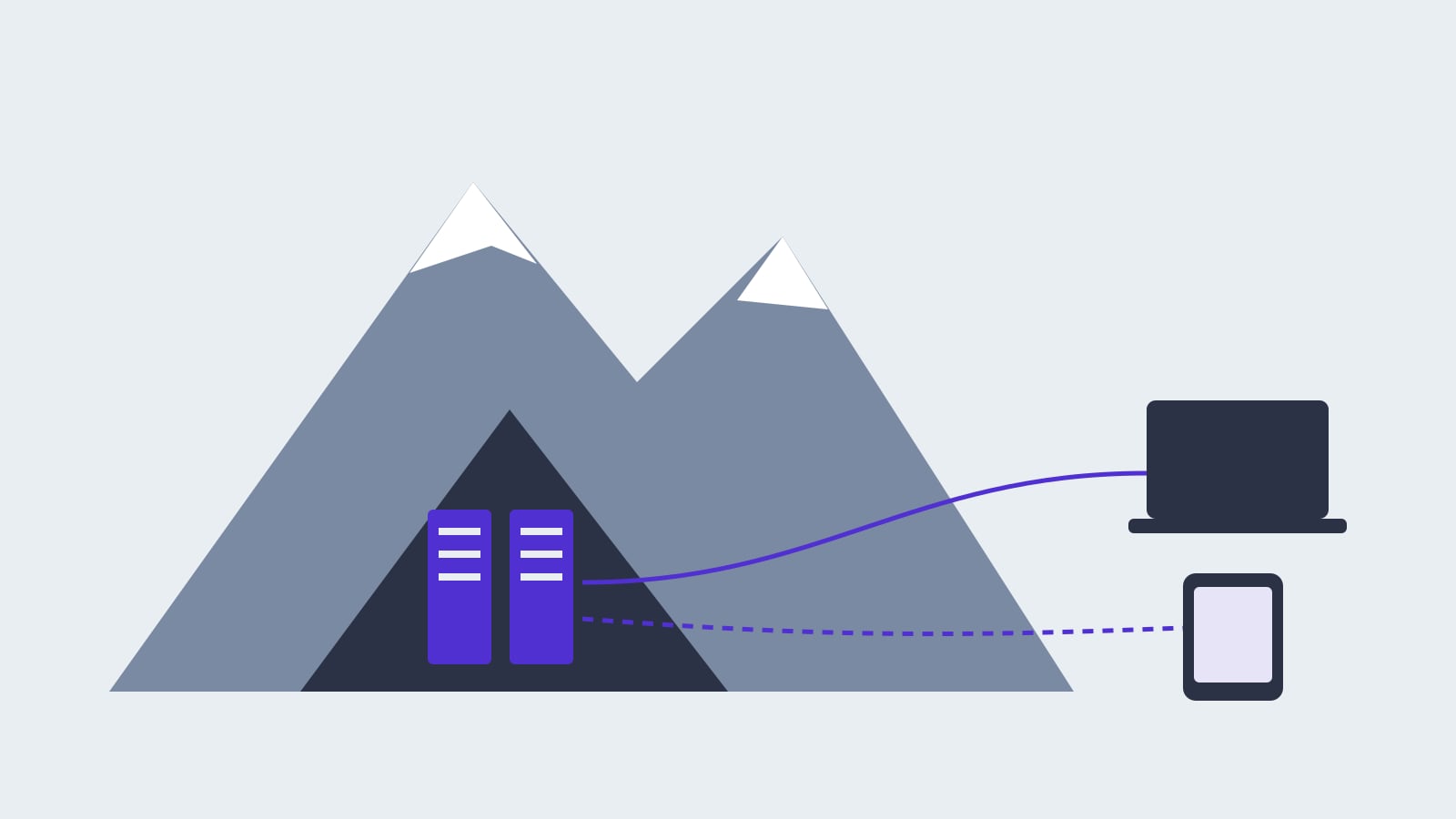
Swiss board portals store data in very different places: Sherpany, HeyEla and topboard in Swiss data centres, Loomion in your data centre, its Swiss cloud or your Azure, ELIZA in Switzerland or the EU, SoftForge in your own Microsoft 365 tenant, Brainloop's MeetingSuite in Germany or Switzerland, and Konsaro with board data in Zürich and application servers in the EU. Storage location is only half the answer; where data is processed, who can reach it and which sub-processors touch it matter too.
Why are storage and processing different questions?
Storage is where files and database records rest. Processing is where they are handled while you work: application servers that render the agenda, search indexes, email delivery and, increasingly, AI models that read papers or transcripts. A vendor can store data in Switzerland and still process parts of it elsewhere. The sub-processor list is where that becomes visible, so read it with the same care as the hosting statement.
Swiss data protection law points the same way. A controller that hands processing to a provider must make sure the provider can guarantee data security (Art. 9 para. 2 FADP), the provider may pass the work to a third party only with the controller's prior approval (Art. 9 para. 3), and disclosure of personal data abroad needs either an adequacy decision of the Federal Council or suitable safeguards (Art. 16 paras. 1 and 2). Board papers often contain personal data about directors, employees and candidates, so those rules are part of the hosting question, not a separate one.
Where does each portal store board data?
| Vendor | Storage stated | Processing notes |
|---|---|---|
| Sherpany | Geo-redundant, independent data centres in Switzerland | SaaS or hybrid cloud with on-premises storage |
| Loomion | Own data centre, Loomion Cloud in a Swiss Tier 4 data centre, or customer's Azure | Choice made per customer |
| HeyEla | Exclusively Switzerland, at Nine Internet Solutions | AI inference and identity sub-processors in Switzerland |
| topboard | Switzerland, data centres in Gland and Geneva | Hosted on Hidora servers |
| ELIZA | Switzerland or EU, depending on hosting booked | Office Online and AI Assistant use services outside Switzerland |
| SoftForge | Customer's Microsoft 365 tenant | No information leaves the tenant, per vendor |
| Brainloop MeetingSuite | Germany or Switzerland, selectable | ISO-certified data centres |
| Konsaro | Board data in Zürich | Application servers in the EU; AI via EU endpoint |
What do the set-ups mean in practice?
- Swiss-only stacks, such as HeyEla and topboard, keep both storage and most processing in Switzerland, which simplifies data protection reviews.
- Customer-hosted options, such as Loomion on-premises or in your Azure, and SoftForge in your Microsoft 365 tenant, put control and maintenance with your IT team.
- Selectable regions, such as ELIZA and Brainloop MeetingSuite, let you choose, but you must check which region your contract names.
- Split set-ups, such as Konsaro, store board data in Switzerland while processing runs in the EU, which you should see listed among the sub-processors.
What does each model do well, and what does it cost you?
No model is simply better. Each trades control, effort and exposure differently.
| Model | Does well | Watch for |
|---|---|---|
| Swiss vendor cloud (Sherpany, HeyEla, topboard) | Simple to buy and run; storage and most processing stay in Switzerland | Sub-processors for email, search and AI; the contracting entity and its group |
| Customer-hosted (Loomion on-premises or Azure, SoftForge in your tenant) | Maximum control; data stays under your own security regime | Your IT team carries patching, backups, availability and upgrades |
| Selectable region (ELIZA, Brainloop MeetingSuite) | Fits both Swiss and EU boards; you choose | The region is a contract choice; check which one you actually booked, and which services sit outside it (ELIZA names Office Online and AI Assistant) |
| Split set-up (Konsaro) | Board data in Switzerland with application servers in the EU | Processing in the EU must be acceptable under your rules; the EU location is a design choice, not a Swiss-only stack |
Which set-up fits which board?
| Board | Questions that decide it | Models to look at first |
|---|---|---|
| Regulated institution (bank, insurer) | Is the portal an outsourcing? Can the supervisor and auditor get audit rights? See our FINMA checklist | Swiss-only stacks or customer-hosted, with the contract carrying audit rights |
| Listed company or large group | Group IT rules, SSO, data classification of board papers | Customer-hosted or Swiss cloud with SSO; check sub-processors |
| Mid-sized SME with Swiss and EU members | Where do directors read, and what do you accept for processing? | Selectable region, or a split set-up if EU processing is acceptable |
| Foundation or association | Budget and simplicity before everything else | Swiss cloud with transparent per-user or flat prices; see software for association and foundation boards |
| German subsidiary of a Swiss group | Which law governs the data, and does the group want Swiss storage? | Selectable region, or a split set-up with documented sub-processors |
Which portal should you shortlist on hosting grounds alone?
Hosting is one criterion, not the decision. These are pointers from the vendors' own statements, not a ranking.
- Choose a Swiss-only stack such as HeyEla or topboard if your rule is that storage and most processing stay in Switzerland and you want the vendor to run the system.
- Choose Sherpany if you want Swiss data centres and a vendor that also describes a hybrid option with on-premises storage.
- Choose Loomion or SoftForge if your IT team wants the data inside your own data centre, Azure or Microsoft 365 tenant and accepts the operating work.
- Choose ELIZA or Brainloop MeetingSuite if you need to select between Switzerland and the EU (ELIZA) or Germany and Switzerland (Brainloop) and will write the choice into the contract.
- Choose Konsaro if board data in Zürich with application servers in the EU fits your rules, you want published per-user prices and you do not need on-premises hosting.
This post covers hosting only. For features, prices and fit, see our head-to-head posts such as Konsaro compared with Sherpany, with HeyEla and with ELIZA.
How is Konsaro set up?
Konsaro stores board data in Zürich, encrypted with AES-256 at rest, and uses TLS in transit. Its application servers run in the EU. AI features run in the EU with zero data retention; board material is not used for training, and admins can switch AI off. The full list of providers is on the sub-processor list, and the measures on the security page and the trust page. Konsaro does not hold an ISO 27001 or SOC 2 certificate.
Which questions should you ask every vendor?
- Where are files and database backups stored, by city or data-centre operator?
- Where do application servers run, and where does support access data from?
- Which sub-processors handle board data, including email, search and AI?
- Can AI features be switched off, and is board material used for training?
- Is the hosting location written into the contract or data processing agreement?
Asking the same five questions of every vendor turns marketing statements into comparable answers. Add one more: who is the contracting party, and does it belong to a group outside Switzerland? On what foreign authorities can demand from a provider, read our post on the US CLOUD Act and Swiss board data; on what Swiss versus EU hosting changes, see Swiss hosting vs EU hosting for board data. Our information security page explains how Konsaro answers them.
What does the contract clause look like? Sample wording
Hosting statements on a website are not a commitment. Ask for wording like this in the data processing agreement, adapted by your lawyer: «The provider stores the customer's personal data and documents exclusively in [city/country], including backups. The provider processes them only in [countries]. Sub-processors are listed in Annex [x]. The provider informs the customer at least [x] days before adding or replacing a sub-processor, and the customer may object. Support access from outside [country] requires the customer's prior approval and is logged.»
What does a comparison look like in practice? A worked example (invented)
Muster AG is an invented company with a seven-member board, two members living in Germany. The board office shortlists three portals and sends the five questions plus the contracting-party question. Vendor A answers «Swiss data centre» but names an EU email service; vendor B names the data-centre operator in Switzerland, lists every sub-processor and offers a Swiss-only AI option; vendor C offers a region choice and wants the choice written into the contract.
The board does not pick the one with the most Swiss wording. It records its rules first: board papers must be stored in Switzerland, processing in the EU is acceptable if listed, AI must be switchable. Vendor B and vendor C both pass; vendor A fails on the unclear sub-processor. The decision, the answers and the contract clause go into a one-page hosting record.
What can a vendor's website not tell you?
A hosting statement is a starting point. Four things rarely appear on a website, and each can matter more than the data-centre city.
- Backups and disaster recovery: the primary copy may be in Switzerland while a recovery copy sits elsewhere. Sherpany, for example, describes geo-redundant data centres; ask whether the second site is also in Switzerland.
- Support and operations: the people who keep the system running may work from another country and may be able to reach data for troubleshooting. Ask how that access is approved and logged.
- Features that move data: email delivery, full-text search and AI features each use their own services. ELIZA's own site, for example, says that Office Online and the AI Assistant use services outside Switzerland, which is the kind of detail that decides a review.
- The end of the contract: ask how long data stays after termination, in which format it is returned and how deletion is confirmed.
Where a vendor's page does not answer, write the question into your request for proposal or into the security questionnaire and keep the written answer.
What should the board office document?
Once you have the answers, write them into a one-page hosting record for the board: storage location, processing locations, sub-processors, AI settings and the contract clause that fixes them. Review it once a year and whenever the vendor publishes a new sub-processor list. That record is what auditors, data protection officers and new directors ask for, and it turns a technical question into a governance decision the board can own.
Which mistakes do boards make when they compare hosting?
- Comparing «Swiss hosting» claims without asking about processing and support.
- Treating a certificate as an answer about location; certificates say what was audited, not where data sits.
- Forgetting backups, email delivery and AI features, which are often elsewhere.
- Not asking who the contracting entity is.
- Choosing a customer-hosted option without budgeting the IT time to run it.
Frequently asked questions
Which board portals store data only in Switzerland?
HeyEla and topboard state Swiss-only hosting; Sherpany states Swiss data centres. Loomion offers a Swiss cloud among its options.
Can I host a board portal in my own Microsoft 365?
SoftForge's meeting management runs in your Microsoft 365 tenant, and Loomion can store data in your Azure.
Where does Konsaro process data?
Board data is stored in Zürich; application servers run in the EU; AI runs through an EU endpoint with zero data retention.
Is Swiss storage enough for compliance?
Not on its own. Check processing locations and sub-processors as well as storage, and whether the contract fixes them.
Is processing in the EU allowed for Swiss board data?
Swiss law does not forbid disclosure abroad; it requires an adequacy decision or suitable safeguards (Art. 16 FADP) and that the provider guarantees data security (Art. 9 FADP). Your own regulator, articles or industry rules may be stricter, so ask your lawyer.
What is the difference between a sub-processor and a vendor?
A sub-processor is a company the vendor uses to process your data, such as a hosting operator, an email service or an AI provider. Your contract should make the vendor answer to you for them, and under Art. 9 para. 3 FADP may use them only with your prior approval.
How often should we review hosting?
Once a year and whenever the vendor announces a new sub-processor or a new feature that moves data, such as an AI function.
Sources
- Federal Act on Data Protection (FADP, SR 235.1), Art. 8, 9, 16 (checked 29 October 2026)
- Sherpany: security and compliance (checked 27 October 2026)
- Loomion: software (checked 27 October 2026)
- HeyEla: home page (checked 27 October 2026)
- HeyEla: trust (checked 27 October 2026)
- topboard: home page (checked 27 October 2026)
- ELIZA: data security (checked 27 October 2026)
- SoftForge: meeting management (checked 27 October 2026)
- Brainloop: MeetingSuite (checked 27 October 2026)